Buying Near RTP 3.0 in Morrisville, Cary and Apex
What should you compare before buying near RTP 3.0?
When you're buying near RTP 3.0, compare the stage of nearby land, your actual commute route, and how close you'd sit to possible construction, not just the distance to the Park. The framework allows mixed-use and limited residential development across roughly 7,000 acres but doesn't require any of it to be built, so the real question is which specific parcels near your target home have filed or approved plans.
Key Takeaways
- RTP companies and landowners unanimously approved RTP 3.0 on June 29, 2026, opening roughly 7,000 acres to mixed-use and limited residential development for the first time in the Park's nearly 70-year history.
- RTP 3.0 sets no housing-production target, so a parcel that is allowed to change is not a parcel that will change.
- Residential use already exists inside the Park: the 406-unit MAA Nixie apartment project at Hub RTP is complete.
- Recent local market data for the 5401 North neighborhood (all home types sold July to September 2026, about nine sales) shows 52% of current listings with a price cut averaging 3.7% and 7.5 months of supply, which signals negotiating room in at least some pockets.
- Regionally, Axios Raleigh reported September 2026 Triangle home sales down 2.4% and homes on the market up 4.4%.
How do you tell whether land near RTP will actually change?
Sort every nearby parcel into one of five stages: framework only, filed application, approved plan, active construction, or completed. Only the last four are evidence that something is happening, and each carries different consequences for you.
What RTP 3.0 does and doesn't do
RTP approved the new private development standards on June 29, 2026. The framework offers three pathways: an Enhanced Corporate Campus, Residential Neighborhood Development, and a Mixed-Use Node. That's a menu of options for landowners, not a construction schedule.
RTP is explicit that the plan creates a framework without a housing target and is meant to guide roughly the next 50 years of growth. Applications under the new framework opened in July 2026, so filed applications are the first real signal. The RTP Development Code is the document that spells out site-level standards, permitted pathways, and design requirements.
The five stages, and what each means for a buyer
| Stage | What it means for you | Where to confirm it |
|---|---|---|
| Framework only | Change is possible on that land, but nothing is proposed. | RTP 3.0 and the RTP Development Code |
| Filed application | Someone wants to build. Density and timing can still shift. | RTP application materials and the county or town planning department |
| Approved plan | Use, layout, and required road improvements are set on paper. | Approved site plan and any attached transportation analysis |
| Active construction | Expect noise, truck traffic, and possible lane or road closures. | Building permits and what you see on site |
| Completed | The impact is known and you can judge it in person. | Visit at your own commute hours |
Where to check before you write an offer
- Confirm whether the parcel falls under RTP standards or under municipal or county zoning. RTP spans Wake and Durham counties, so jurisdiction matters.
- Check the relevant planning department for rezoning cases, site plans, subdivision cases, special-use approvals, and building permits near the property.
- Review RTP's project and application materials for anything filed since July 2026.
- Read any transportation-impact analysis and required road improvements attached to an active project.
- Confirm status directly with the planning authority before you treat a proposal as imminent or as dead.
This is the kind of parcel-level research I run through with buyers before they commit, because a proposal that is live on one side of a street can be nowhere near the other.
How should you compare commute access against construction and traffic?
Compare the specific route you'll drive, at the hours you'll drive it, against the stage of any project along that route. Proximity to RTP doesn't produce a uniform commute benefit, and a city label like Morrisville, Cary, Apex, or western Raleigh won't tell you which corridor you'll use.
Test your actual corridors
Households near RTP typically rely on some mix of I-40, NC 54, Davis Drive, Airport Boulevard, Hopson Road, and local connectors. Drive your own version of that commute on a weekday morning and evening before you offer. I don't have verified project-specific traffic volumes for RTP 3.0, so don't trust anyone, including me, who promises that new housing inside the Park will either relieve or worsen a particular road. The honest answer sits in the transportation analysis for each project.
Housing inside the Park could shorten some commutes by putting people near jobs. It could also add local trips on roads you rely on. Which effect wins depends on the project.
Weigh construction risk by stage
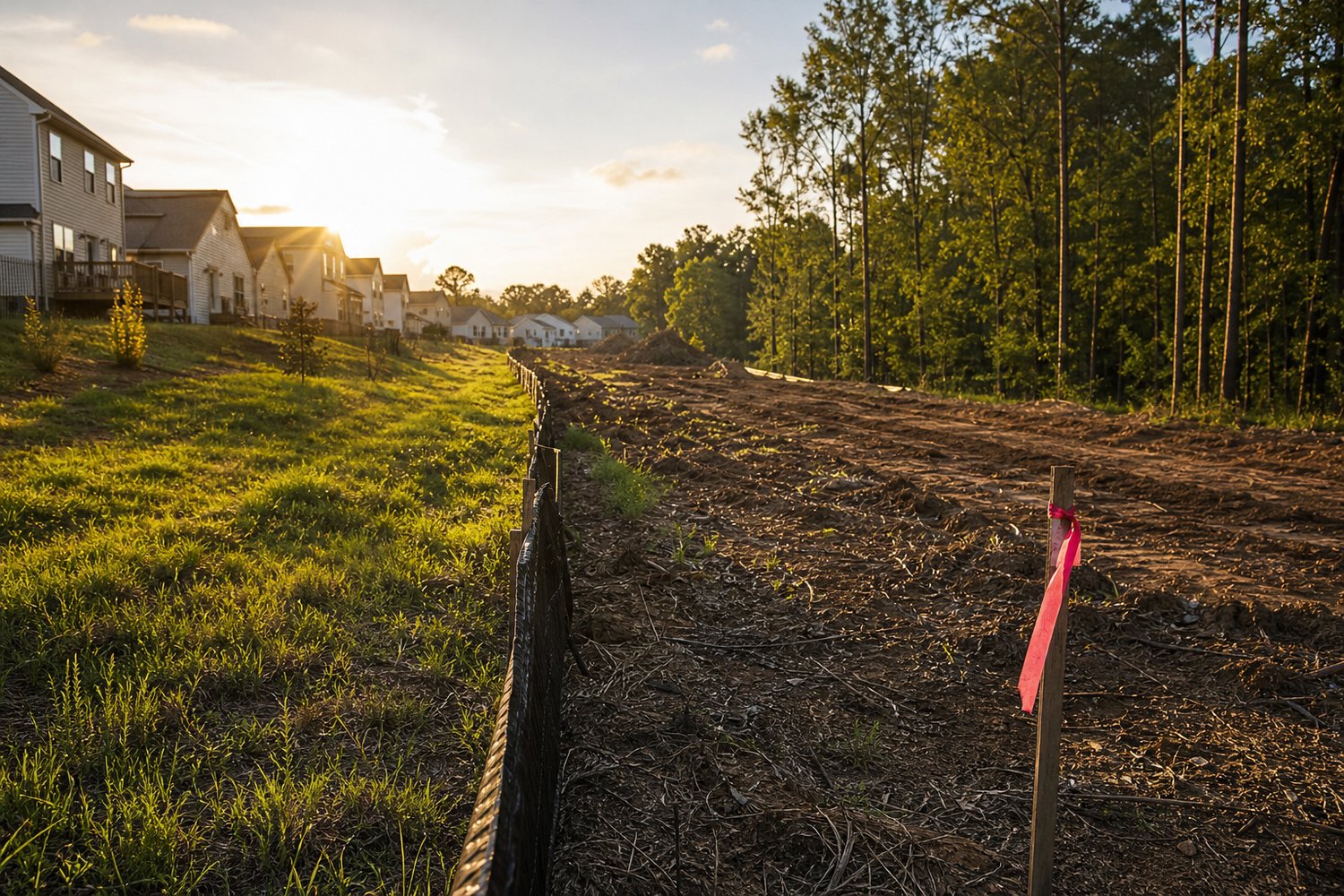
A home next to land at the framework stage has a different risk profile than a home next to an approved plan with permits pulled. Ask what is allowed on the neighboring parcel, what is approved, and what is already moving. Also ask about the final density, since a mixed-use node and a residential neighborhood development can look very different from your back deck.
You can see what completed residential use looks like at Hub RTP, where MAA Nixie's 406-unit apartment project has been completed near workplaces, trails, and dining. It's a useful reference for the live-work-play model, but it isn't a forecast of how many homes the Park will eventually add.
Relocation buyers especially need someone who knows the submarkets, not just the city name. Two homes with the same Cary or Morrisville address can sit in very different situations relative to the Park. For more on how pockets of the region behave differently, see my look at the shifting sub-markets of the Triangle.
Is buying near RTP 3.0 worth it, and how do you negotiate?
It can be, if the home works for you today without assuming any change in the Park. Buy for what is built and approved, treat future benefits as a bonus, and use any uncertainty as a negotiating point.
What the market data says right now
Regionally, Axios Raleigh reported that overall September 2026 Triangle home sales fell 2.4% while homes on the market rose 4.4%. That's a broad regional picture, not a municipality-by-municipality one.
For one local pocket, recent local market data for the 5401 North neighborhood covers all home types sold July to September 2026. The median sale price was about $425,000, but it rests on only nine sales, so treat it loosely. Homes sold at an average of 97.5% of list price, 52% of current listings had a price cut averaging 3.7%, and months of supply sat at 7.5. Only 17% went under contract within two weeks of listing. This is one neighborhood and not a measure of the RTP area, so use it as an example of how to read negotiating room. Any individual home's value still depends on condition, street, build year, and timing. For the wider picture, my Q4 2026 Research Triangle market update is a good companion read.
Compare an existing neighborhood with a new mixed-use project
- Known versus projected: An established street shows you its traffic, noise, and layout today. A new project asks you to rely on renderings and phasing plans.
- Construction exposure: A finished neighborhood nearby may have little active building. A new mixed-use node may be under construction for a while, and timing is project-specific.
- Walkable amenities: New mixed-use areas may add dining and trails, but only if those parts are approved and built. Don't pay today for amenities that exist only on paper.
- Future density: Ask what the neighboring parcels are permitted to become, not just what stands there now.
- Road improvements: Find out what is required, who builds it, and when.
Before you make an offer, I'd also ask the seller or listing agent what they know about nearby applications, then verify it with the planning department rather than relying on the answer. If you're also choosing between towns, my comparison of North Raleigh and Cary shows how to weigh location trade-offs side by side.
Every property sits in its own situation. The way to know yours is to run the parcel, the route, and the price together with someone who knows this market, and that's the work I do with buyers.
If you'd like to hear what other clients say about working with me, you can read reviews on Google, Zillow, and Realtor.com.
FAQ
What exactly does RTP 3.0 allow to be built near Morrisville and Cary?
RTP 3.0 allows mixed-use and limited residential development through three pathways: an Enhanced Corporate Campus, Residential Neighborhood Development, and a Mixed-Use Node. It applies across roughly 7,000 acres of the Park, and the RTP Development Code sets the site-level standards. It doesn't require any housing to be built.
Will RTP 3.0 automatically bring apartments and townhomes to my neighborhood?
No, the framework gives landowners options but sets no housing-production target. Change near a given home depends on whether a specific parcel has a filed application, an approved plan, and permits, which you can check with the county or town planning department.
How can I check whether a specific parcel near RTP has an active development application?
Start with RTP's application and project materials for anything filed since July 2026, then check the county or municipal planning department for rezoning, site plan, subdivision, special-use, and permit records. Confirm status directly with the planning authority before treating a proposal as imminent.
Will new housing inside RTP reduce or worsen commute traffic?
It depends on the project, and there's no verified RTP-wide traffic figure to rely on. Housing near jobs can shorten some trips and add local traffic on others, so look at the transportation-impact analysis and required road improvements for each active project along your route.
What should buyers ask about construction timing and future density before making an offer?
Ask what stage nearby land is in, what the zoning or RTP standards permit there, what has been approved, and what road improvements are required and when. Then verify each answer with the planning authority. I can walk you through that research for any property you're considering.
Closing
Buying near RTP 3.0 comes down to parcels, routes, and stages, not the Park's name. If you want help comparing specific homes in Morrisville, Cary, Apex, or western Raleigh, I'll walk through the planning records, commute routes, and pricing with you. You can schedule a consultation or learn your home value if you're also selling.
Equal Housing Opportunity. Scott Hoffman, NC License Number 171366; designations: ALC, ABR, e-Pro, Dave Ramsey Endorsed Provider. Regulated by the North Carolina Real Estate Commission. Each office is independently owned and operated. This article is general information, not legal, tax, or financial advice; confirm your own numbers with your real estate attorney, tax advisor, or lender.