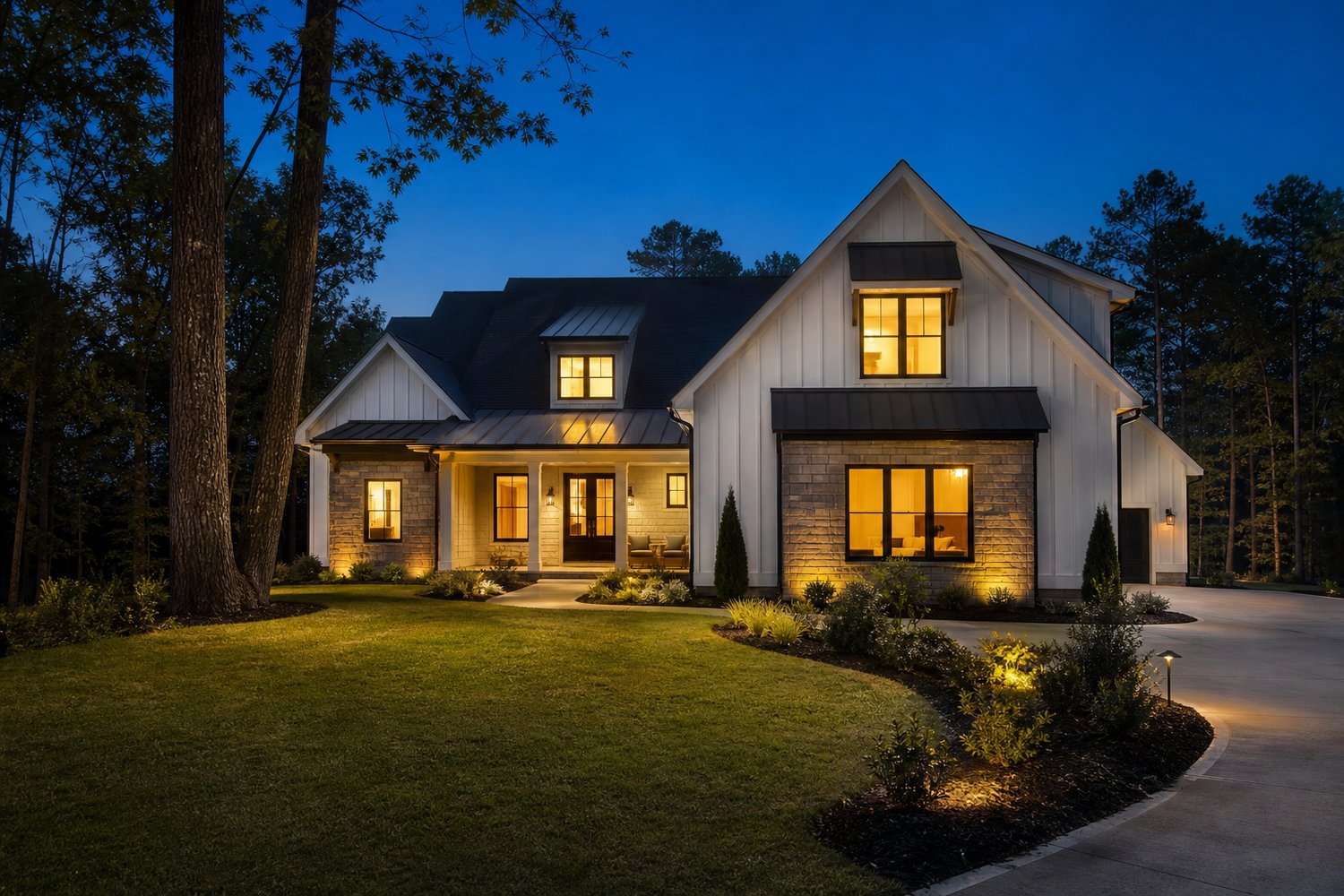
What should Raleigh sellers prepare before listing their home?
Raleigh sellers should prepare in a fixed order: walk the home and gather records, finish visible repairs, declutter, deep-clean, fix lighting and access, and only then schedule photography and set showing rules. The order matters because photos and the listing presentation capture whatever condition the home is in on that day. Rushed prep usually means paying twice, once in repairs and again in a weaker launch.
Key Takeaways
- Realtor.com reported a $460,000 median sold price and 58 median days on market for Wake County in October 2026, so a home that launches half-ready can sit for weeks.
- Realtor.com put the Raleigh median sold price at $427,000 with 62 median days on market in October 2026, and 20.5% of listings nationally carried price reductions.
- Photography goes last in the sequence, after repairs, cleaning, decluttering, and staging are finished.
- Gather permits, warranties, invoices, surveys, and HVAC and roof records before you list, and confirm the required North Carolina disclosure and federal lead-paint paperwork against the current official forms.
- Set showing rules (notice, hours, pets, alarm, occupancy limits) before the listing goes live, not after the first request arrives.
What do the latest Wake County numbers say about preparation?
They say buyers have time to compare, so a home that shows poorly has little room to recover. The most recent figures available, from Realtor.com's October 2026 reports, show homes in Wake County and Raleigh taking around two months to sell at the median.
| Area (Realtor.com, October 2026) | Median sold price | Active listings | Median days on market |
|---|---|---|---|
| Wake County | $460,000 | 8,641 | 58 |
| Raleigh | $427,000 | 3,294 | 62 |
For context, Realtor.com's national report for October 2026 showed a 63-day median time on market and 20.5% of listings with price reductions. Those are national figures, not local ones.
These are portal-based county and city numbers, so I don't attach them to Cary, Apex, Holly Springs, or any other individual town. Your street and price band can move faster or slower than the county median, which is why I pair preparation with a local pricing review. If you want the reasoning behind avoiding price cuts, my pre-listing playbook covers it in more depth.
What is the right order for Raleigh sellers to prepare a house?
Start with a walkthrough and your records, then repairs, then decluttering and deep cleaning, then lighting and access, and finish with photography. Here is the full sequence I walk Raleigh sellers through:
- Walk the property and list safety, water-intrusion, mechanical, cosmetic, and deferred-maintenance issues.
- Gather records before deciding which work is worth doing.
- Complete high-visibility repairs and touch-ups.
- Remove excess furniture, personal photographs, collections, and stored items.
- Deep-clean the whole home.
- Fix lighting and confirm that doors, windows, cabinets, and gates work.
- Decide how occupied rooms will be arranged for photos and showings.
- Book photography only after the work above is done.
- Set showing rules.
- Review the final presentation and documents before publishing.
Which repairs should you make first?
Fix anything tied to safety, water, or mechanical function before you touch cosmetics. In the Raleigh and Wake County area, I look hardest at visible moisture, roof wear, crawl-space or foundation concerns, drainage, gutters, HVAC service history, pest activity, and exterior upkeep. Those are preparation priorities, not defect statistics, and each home is different.
Buyers and their inspectors notice these items, and a small unrepaired problem can make a buyer question everything else about the home. A pre-listing evaluation is one way to see the list before a buyer does.
Should you renovate a kitchen or bathroom before selling?
Not by default. Targeted fixes like paint touch-ups, failed fixtures, and worn caulk usually make more sense than a major remodel done under deadline pressure. Whether a larger project pays off depends on your price range and what comparable homes nearby sold for, and that is a conversation to have with me before you hire a contractor, not after.
What documents should you gather before listing?
Collect permits, warranties, renovation invoices, your survey, appliance information, roof and HVAC records, and any environmental reports you have. Records like these help buyers trust the home. They are different from the paperwork required by law or contract.
North Carolina's residential property disclosure statute, G.S. 47E-4, covers conditions such as lead-based paint, asbestos, radon, methane, underground storage tanks, and other environmental contamination. For most homes built before 1978, federal lead-based paint rules also apply before a buyer is bound to a contract. Use the current official forms and EPA and HUD guidance, and ask your real estate attorney if you have questions about what applies to your property.
How should you declutter, clean, and stage before photos?
Declutter first, deep-clean second, and stage last. If you clean before you pack, you clean twice.
How much should you declutter?
More than feels natural. Clear counters, thin out furniture so each room has an obvious purpose, and remove personal photographs and collections. Don't forget closets, garages, attics, and utility areas, since buyers open them. Boxes stacked in a garage tell a buyer the house lacks storage.
Is ordinary cleaning enough?
Usually not. Deep-clean windows, floors, kitchens, bathrooms, baseboards, and fixtures, and deal with odor sources at the source. Then replace failed bulbs, open blinds, and confirm every door, window, cabinet, and gate operates. Bright, working rooms photograph and show better.
When should photography happen?
After everything above is finished, never before. In my experience, professional photos and a strong marketing plan separate a listing that draws showings from one that gets scrolled past, and the camera shows exactly what you left in the room. A reshoot later is possible, but the first impression online has already been made.
What showing plan should you set before the listing goes live?
Decide your notice requirements, showing hours, pet arrangements, alarm instructions, occupancy limits, and open house procedures before launch. Settling these in advance means you aren't improvising when the first request arrives.
If you still live in the home, build a repeatable reset routine:
- Beds made and counters cleared
- Dishes put away
- Lights working and blinds positioned the same way each time
- Pets secured and valuables stored
- Temperature set comfortably
That routine is practical guidance, not a legal requirement, and it makes a short-notice showing manageable. If a tenant occupies the home, access and notice depend on the lease, so confirm the details with your real estate attorney and coordinate the schedule in advance.
Last, review the finished listing presentation and your document folder before it publishes. If the home has already been on the market a while, see what Raleigh-area sellers should do when a home sits. Your timing and priorities also shape the plan, so I tailor it to your situation. Preparation supports your price, but it doesn't replace a pricing review built on comparable sales. You can learn your home value to see where you stand.
Want to see how I work with sellers? Read client reviews on Google, Zillow, and Realtor.com.
FAQ
What repairs should I make before listing my Raleigh-area home?
Start with safety, water, and mechanical issues, then visible cosmetic items. Leaks, roof wear, drainage problems, and HVAC concerns matter more than paint color. A walkthrough with me will help you rank the list before you spend anything.
Should I renovate the kitchen or bathrooms before selling in Wake County?
Usually only if comparable sales in your price range support it. Smaller fixes like paint, fixtures, and caulk are often the better first step. I'd compare nearby sales with you before you commit to a larger project.
How much should I declutter before real-estate photos?
Clear surfaces, remove personal photos and collections, and thin out furniture until each room reads clearly. Include closets, garages, and attics, because buyers open them. Do this before deep cleaning so you only clean once.
What documents should I gather before listing a house in North Carolina?
Gather permits, warranties, invoices, surveys, appliance details, and roof and HVAC records, plus any environmental reports. Required paperwork includes the North Carolina residential property disclosure under G.S. 47E-4 and, for most pre-1978 homes, federal lead-paint disclosure. Use the current official forms for both.
When should I schedule photography relative to repairs, cleaning, and staging?
Photography comes after repairs, decluttering, deep cleaning, and staging are complete. The photos set the first impression online, so the home should look the way you want buyers to see it on the first day.
Ready to build your pre-listing plan?
A good launch comes from doing the right work in the right order, and you don't have to sort out that order alone. I'll walk through your home, your records, and your timeline with you, and my team will help coordinate the pieces. Schedule a consultation and we'll build the plan together.
Equal Housing Opportunity. Scott Hoffman, NC License Number 171366; designations: ALC, ABR, e-Pro, Dave Ramsey Endorsed Provider. Regulated by the North Carolina Real Estate Commission. Each office is independently owned and operated. This article is general information, not legal, tax, or financial advice; confirm your own numbers with your real estate attorney, tax advisor, or lender.